
Four Major EVA Foaming Processes for Shoe Soles
EVA (Ethylene Vinyl Acetate) is widely used in footwear manufacturing due to its lightweight properties, excellent resilience, and good processability. With the continuous upgrading of footwear performance requirements and manufacturing technologies, EVA sole foaming processes have gradually become more diversified and mature. At present, the mainstream EVA foaming processes in the industry mainly include **traditional flat-sheet foaming, in-mold micro foaming, injection crosslinked foaming, and supercritical foaming**. Each process has its own characteristics in terms of foaming mechanism, product performance, and production cost, which directly affect the appearance quality of shoe soles and their suitability for subsequent processing. A thorough understanding of the characteristics and differences of these four EVA foaming processes is the foundation for achieving stable production and high-quality EVA shoe soles.
1. What Is EVA?
EVA is the abbreviation for Ethylene Vinyl Acetate copolymer, which is a random copolymer composed of non-polar, crystalline ethylene monomers and strongly polar, amorphous vinyl acetate (VA) monomers.
EVA is a thermoplastic polymer, making it suitable for various processing methods such as injection molding, extrusion, blow molding, calendering, rotational molding, vacuum thermoforming, foaming, coating, heat sealing, and welding.
EVA materials have long been widely used in the footwear industry. EVA blended foamed shoe materials feature softness, good elasticity, shock absorption, and chemical resistance, and are extensively applied in the soles of mid- to high-end athletic shoes, hiking shoes, slippers, and sandals.
In footwear applications, EVA foaming processes are generally classified into four types: traditional flat-sheet foaming, in-mold micro foaming, injection crosslinked foaming, and supercritical foaming, among which compression foaming and injection crosslinked foaming are the most commonly used.
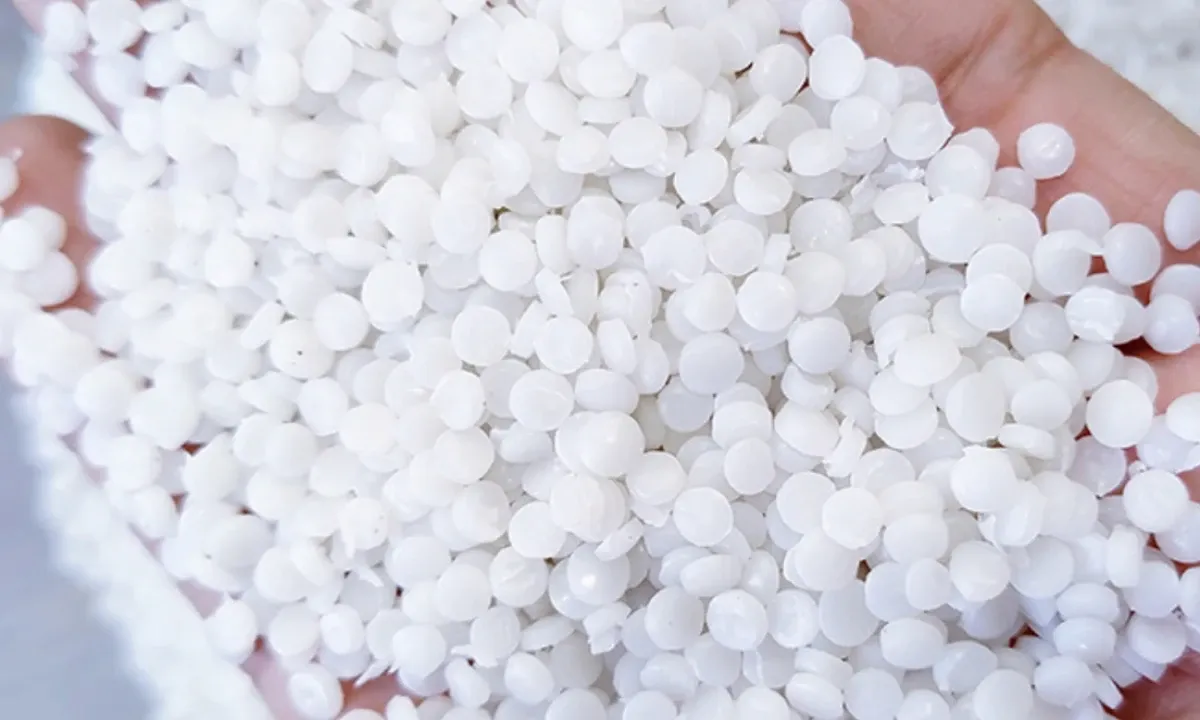
2. Traditional Flat-Sheet Foaming Process
This process is commonly adopted by small-scale factories due to its relatively low equipment investment cost. The process produces EVA foam sheets, which are then converted into finished products through cutting, trimming, and edge grinding. However, this method features low production efficiency and a high amount of material waste from offcuts and scrap.
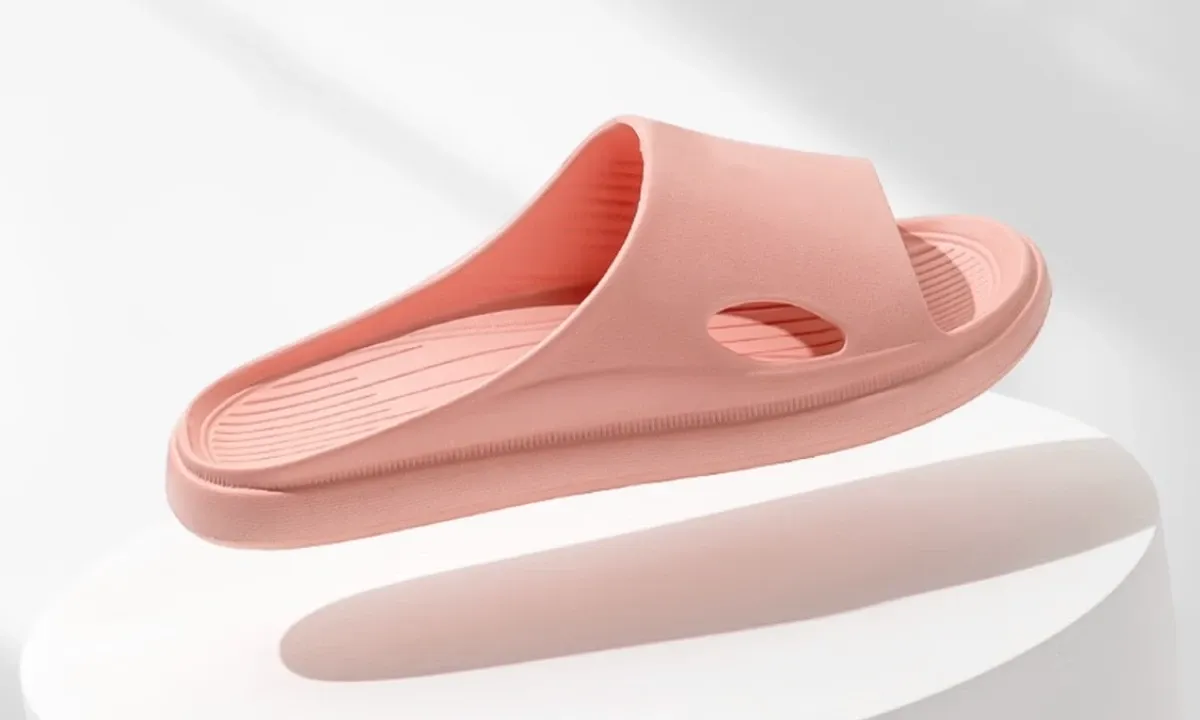
3. In-Mold Micro Foaming Process
In-mold micro foaming, also known as compression foaming, involves compounding EVA materials according to a specific formulation, pelletizing them, weighing the material, and placing it into a prepared mold. After foaming, the product already takes the general shape of the shoe sole.
This process offers higher detail definition and better dimensional accuracy.
In-mold micro foaming can be further divided into single-step compression foaming and two-step compression foaming. For example, PHYLON midsoles are produced using two-step EVA compression foaming, providing excellent dimensional stability and design flexibility, allowing the shape to be customized according to the design requirements of different athletic shoes.
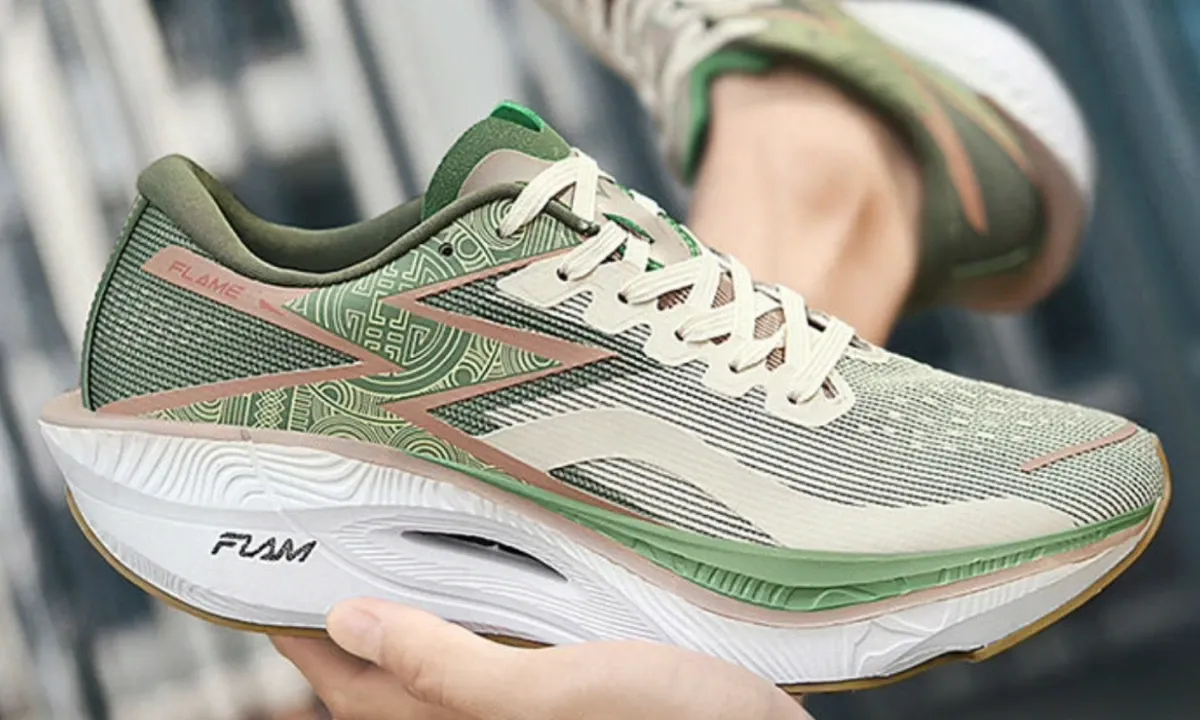
4. Injection Crosslinked Foaming Process
Injection crosslinked foaming has become the mainstream process for manufacturing EVA shoe midsoles in large-scale footwear factories. In this process, EVA, modifiers, and additives are high-speed mixed, extruded, and pelletized, followed by injection molding. The mold cavity used in this process is typically only about half the final volume of the finished midsole.
After molding, the high-temperature mold must remain closed for a certain period. Otherwise, when the mold is opened, the EVA midsole may eject itself due to internal expansion. Since the mold cavity is much smaller than the final product volume, the midsole rapidly expands once released. During subsequent cooling, shrinkage may occur. As a result, injection foaming requires more complex control of expansion and shrinkage compared with compression molding.
Compared with in-mold micro foaming, this process offers significant advantages such as high production efficiency, minimal material waste, and lower manufacturing costs, while enabling more diversified and functional product designs.
The main challenge of in-mold micro foaming lies in achieving proper coordination between mold design and material formulation. Otherwise, it is difficult to control both expansion ratio and hardness simultaneously, often resulting in dimensional accuracy with insufficient hardness, or acceptable hardness with undersized products. Process parameters such as temperature, time, and pressure also have a significant impact on material performance.
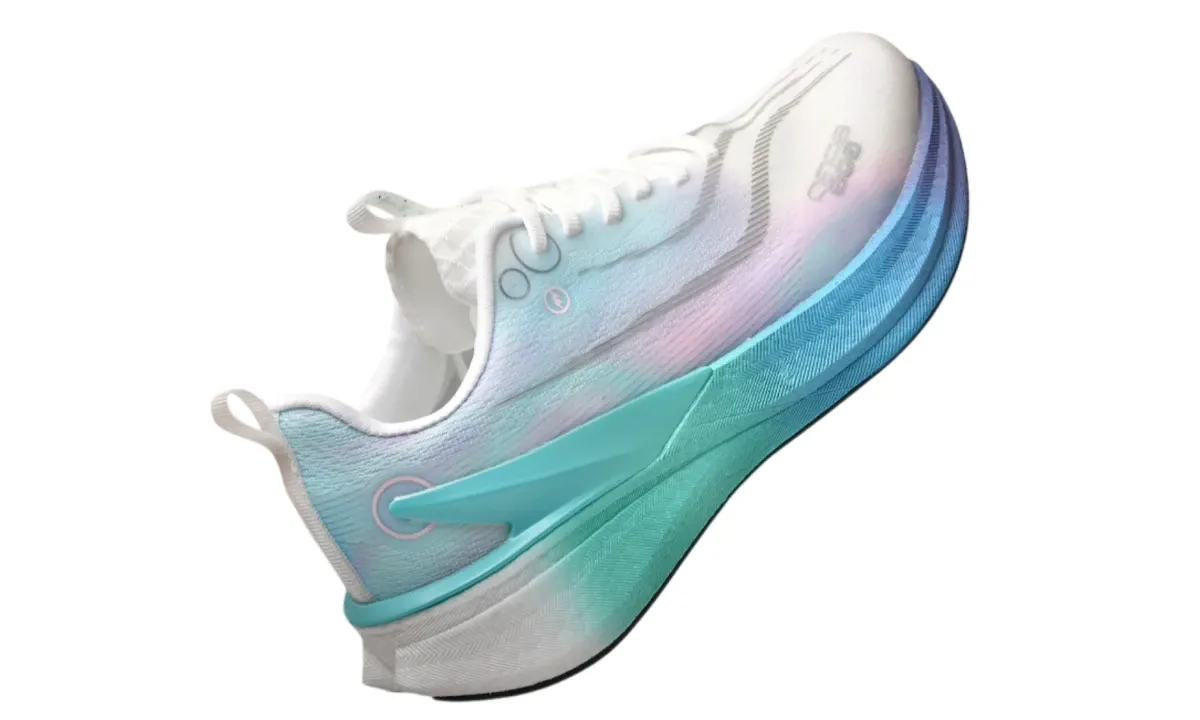
5. Supercritical Foaming Process
EVA molecular chains are linear in structure, which means that crosslinking agents are typically required during foaming to trap the gas within the polymer matrix. Therefore, the key technical challenge of EVA supercritical foaming lies in how to effectively retain the gas.
Based on patent literature and publicly available information from certain manufacturers, the general process route for EVA supercritical foaming is as follows: after internal mixing and compounding, the material undergoes crosslinking and pelletizing, followed by compression molding to obtain a pre-crosslinked shoe sole. The preform is then placed into a high-pressure foaming vessel, where a physical foaming agent is introduced. Through controlled pressure reduction, a fine-cell micro-foamed EVA shoe sole material is produced.
Conclusion
Different EVA foaming processes impose distinct requirements on demolding performance, mold protection, and compatibility with downstream processing. Whether it is traditional flat-sheet foaming, in-mold micro foaming, injection crosslinked foaming, or supercritical foaming, all share common characteristics such as high-temperature molding, complex mold cavities, and a strong dependence on clean surfaces and stable demolding performance. The selection of a mold release agent is no longer merely about achieving easy demolding, but directly affects surface quality, bonding reliability, and overall production efficiency.
For EVA foaming applications, we offer specialized EVA mold release agents that ensure consistent demolding while effectively preventing silicone migration, making them suitable for shoe soles requiring subsequent bonding, lamination, or secondary processing. For injection molding and high-demand structural applications, plastic mold release agents can form a uniform and durable release film under high-temperature and high-pressure conditions, balancing demolding efficiency with extended mold life. In applications involving rubber or rubber–plastic composite processes, rubber mold release agents provide superior heat resistance and chemical stability, ensuring reliable demolding in complex molds and continuous production environments.
By precisely matching foaming process characteristics with appropriate mold release agent performance, manufacturers can significantly reduce sticking, tearing, and surface defects, improve production stability, extend mold service life, and ultimately support the large-scale, high-quality manufacturing of EVA shoe soles.


